A qualitative participatory action research method.
Participants use smartphone cameras to take photos related to Photovoice focus group themes and create an accompanying message for each photo. The goal is to develop community calls to action for policymakers. Photovoice ignites community interest about local challenges and provides the opportunity for community members to creatively document their concerns.
Frontline Community: School-Age Children
"Children need to get out, and sometimes they feel like getting out in the sun. How he plays, and runs! I like to watch him have fun, but I am worried that extreme heat and direct exposure to the sun can hurt him. With so few trees and no guarantee that the fountains will work, we must carry enough bottles of water, and we must minimize the time spent in the park.- Nohemi"
Frontline Community: Outdoor Workers
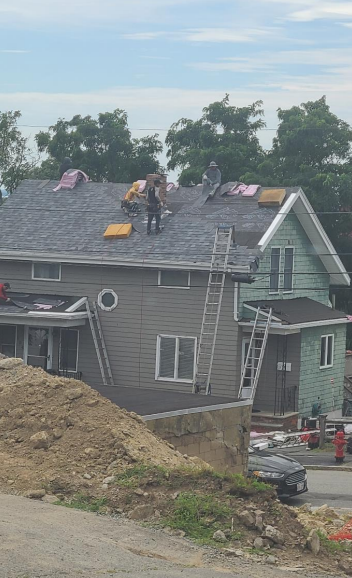
"My husband works in construction. During heat waves, construction workers are vulnerable to dehydration and heat shock, and the effects of intense heat can increase the risk of occupational accidents. Once I heard a construction worker say that on a very hot day, he felt like his shoe soles were melting when walking on a roof. What protections do labor regulations offer to protect these workers from the intense heat and their health risks? - Roxana"
Frontline Community: People Living in an Urban Heat Island
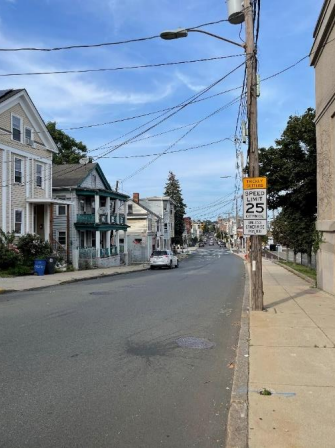
"Here is the view of Chestnut Street standing at Beacon Street. The lack of trees and vegetation is notable, particularly given the proximity to the loud and dirty Tobin Bridge. - Susana
Aquí está la vista de la calle Chestnut desde estar parado en Beacon Street. La falta de árboles y vegetación es notable, particularmente dada la proximidad al ruidoso y sucio puente Tobin."
Frontline Community: Low income Households
"On this street in Chelsea, free food is distributed once a week. People are waiting in line early in the morning, waiting for their turn, for a long time. It is hard to have use this resource to keep going every day, but the elderly, on hot days, these people must wait under the sun until their turn, without being able to take refuge in the shade What could the city do about this? – Nohemi"
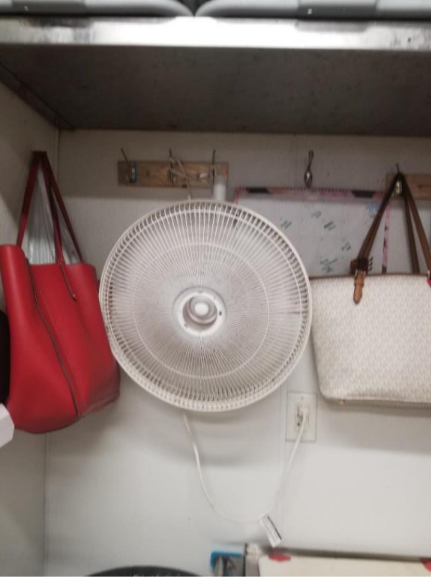
"This is my workplace. It is an enclosed space, and when we cook the heat and humidity feels very intense; it feels unbearable. Since the room is very small, we don't have space for the fan stand on the floor. So, we hang the fan head in the coat hanger. We know it is not an ideal solution, but it is all we can do. - Mayra" "Este es mi lugar de trabajo. Es un lugar cerrado, y al cocinar se acumulan en la habitación la humedad y el calor intenso, que se hace insoportable. Como el cuarto es muy pequeño no tenemos donde poner un ventilador de suelo, pues las patas no caben. Así que colgamos la cabeza del ventilador en el perchero. Sabemos que no es una solución ideal, pero es todo lo que podemos hacer. - Mayra"
Frontline Community: Outdoor Commuters, People with Disabilities
"Broadway St. near Carry Ave. around 1:30pm. Absolutely no protection from the sun. The person waiting at the bus stop and the person in the wheelchair (and who’s pushing the wheelchair) are sweltering in the sun. It definitely sheds light on the need for protection in the City." - Racquel
"Broadway cerca de la Avenida Cary, el sábado alrededor de la 1:30 de la tarde. Absolutamente ninguna protección del sol. La persona que espera en la parada del autobús y la persona en la silla de ruedas (y que empuja la silla de ruedas) se están sofocando al sol. Definitivamente refleja la necesidad de protección en la Ciudad." - Racquel
Frontline Community: People without AC or Inability to Pay for Electricity
"This is an old and inefficient air conditioner unit. It is difficult to save energy with it because I have to keep it on all night to be effective. I worry about the excessive electricity bill because of this AC."- Noemy
The photos and captions above were shared by the C-HEAT photovoice project, a partnership between Boston University School of Public health and GreenRoots Inc., Funded by Barr Foundation. For more information, see here.
Photovoice puts affected people and communities at the center of research.
It breaks past traditional communication barriers that often prevent members of a group from expressing their concerns, such as language, education level, fear, and lack of representation.
Photovoice was created by Caroline Wang and Mary Ann Burris in the early 1990s.
What is unique about the CATCH Photovoice project?
CATCH Photovoice focus groups are facilitated by staff of Community-Based Organization partners, rather than academic researchers. Community facilitators understand local needs and strengths, allowing them to guide discussions to identify and highlight community-informed calls to action and solutions.
List of current community partners:
Boston
New Orleans
Phoenix
Tips on how to take a photo for photovoice - Julia Cumes
.png)
.png)
.png)
.png)

.png)

.png)
.png)
.png)